If You Think Public Buildings are Accessible, Think Again
If You Think Public Buildings are Accessible, Think Again
 |
| Freepik |
Have
you ever been denied access to a certain part of a PUBLIC building? Were you
denied because of your disability, one that requires you to use a wheelchair, wasn't accommodated for? If you can’t relate, think about how it would make you and others feel. Would you feel good? Would you feel like a human being? Or would you feel
like trash thrown to the side?
Turns out,
this is the case for a lot of people every day. The equality and inclusion of
those in wheelchairs should be prioritized when designing public buildings.
Disabled people still have the same rights and feelings as those who are abled.
Public buildings are for everyone, and no one should be discouraged from going anywhere they please. The layout and architecture of every public building
should be thought over carefully before any construction takes place so it will
accommodate everyone, abled and disabled people.
 |
| Freepik |
Most people would ask why wheelchair users should be prioritized over other disabilities. They would have a good counterargument because all disabilities should be thought about equally when designing a building. The author, Catherine A. Okoro, states, “Mobility was the most prevalent disability type (13.7%), followed by cognition (10.8%), independent living (6.8%), hearing (5.9%), vision (4.6%), and self-care (3.7%).” Other disabilities still take up a percentage of the world population. Thinking about and prioritizing just a mobility disability would make the others mentioned feel like trash thrown to the side.
While all
that is true, there are more barriers and obstacles that wheelchair users must
overcome on a day-to-day basis. They have more physical and non-physical
barriers that correspond with being in a wheelchair. They must deal with elevators,
ramps, accessible bathrooms, and other physical barriers along with mental challenges
that relate to the non-physical barriers. The ADA Requirements states, “Wheelchairs are
considered to have more accessibility requirements than other disabilities due
to their primary function as mobility aids for individuals with mobility impairments.”
This shows that there must be alot more thought and work that goes into design
planning when thinking about wheelchair accommodation. Wheelchair accessibility
should be prioritized because of all the extra thought that must go into it.
The design
planning that architects must do before any building can take place is very
expensive. Wheelchair accommodations must be sooooo expensive that most
buildings cannot afford it on top of a million other costs. Wrong. Wheelchair
and even disability accommodations are not as expensive as they seem. According
to the ADA National Network, “The cost of incorporating accessibility features
in new construction is less than one percent of construction costs.” This means
that accessibility can always be thought about when designing buildings since
the cost is so low compared to the rest of the building.
 |
‘People With Disabilities Left Out in ICT Jamboree’, by Ashnah |
People in
wheelchairs have a hard enough time with the physical disability that their
mental health will start to decline. This is because of accessibility issues in
the public. These people cannot go everywhere that their peers can, and this can
be very discouraging to someone in a wheelchair. In the article, Accessibility of public buildings in the United States: a cross-sectional survey, it says, “People
with disabilities discussed how difficulties with accessibility led to
problems, such as losing appointments or careers, not feeling welcome, feeling
humiliated, and giving up on attempting to access parts of the community.” This
shows that public buildings should be accessible for everyone so there is no
discrimination toward those in a wheelchair. How would you feel if you couldn’t
go out with your friends in public and had to be left behind because you were
unable to get to the destination due to the physical barriers in your way. You wouldn’t
feel good. This is why wheelchair accommodations should be put into every
public space.
 |
| Adobe Stock |
Also, if a
person in a wheelchair is unable to get to a certain room in a public building
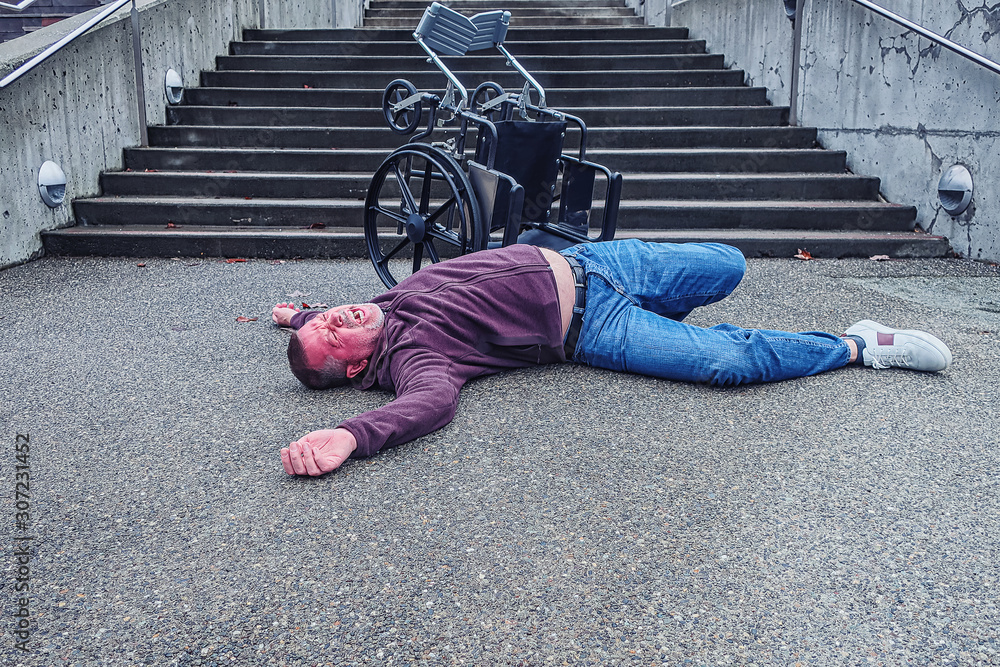
because of zero accessibility, it could lead to damages and injuries. For instance, a wheelchair could not fit through a door and now the person is unable to get to
their business meeting with their boss. What if that person decided that they
had to get through this door? They might get out of the wheelchair in an unfamiliar
environment and lose their balance and fall and injure themself. The Accessibility barriers of wheelchair users in public spaces articles states, ‘Without
accessibility in public spaces, it is dangerous for wheelchair users, so a
barrier-free environment is essential for them to participate fully.” Not only
will this be safer for the person in the wheelchair, but also for the people around
them.
Wheelchair
users should not be discriminated against in public spaces. They have the same
rights as abled people do to be in these buildings. The emotional and physical
barriers that get in the way of full accessibility should be destroyed. Next
time you enter a building, think of those in wheelchairs and how you would feel
if you could not access the entirety of the public building.


Comments
Post a Comment