Visible vs. Invisible Disabilities
Visible vs. Invisible Disabilities
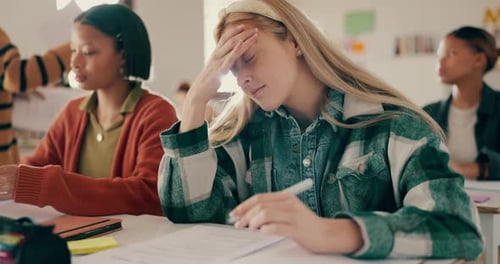
Invisible disabilities are not something that should be ignored or overlooked in society. Disabilities impact millions of people around the world. Kristin Perry defines these disabilities as “...impairments that come with few visual identifiers and are unapparent to an outside observer.” Everyday life can be very difficult for those who have a disability, visible and invisible. The main difference is, people with visible disabilities are often treated differently than those who have an invisible disability.
A visible disability is more obvious to other people around the individual. More often than not, those people are treated differently. Society can normally easily identify those who may be blind, or deaf, or have an amputation. Usually these people get special accommodations and are treated differently, simply just because you are able to see that the individual has a disability. However, not all disabilities can be easily seen. Kristin Perry states “Over 42 million Americans are considered to have a severe disability, and 96% of these are hidden,” proving that most disabilities are not clearly visible to others and go completely unnoticed in everyday life. Kyra Coates says invisible disabilities like “...depression, anxiety, bipolar disorder, PTSD, and schizophrenia are just a few examples that can affect someone’s ability to work, socialize, or manage everyday tasks.” This can often lead to a lot of bullying. A study showed that “children with invisible disabilities are two to three times more likely to be bullied than other kids.” Some people say, “you look fine” or “doesn’t look like anything is wrong with you.” Just because you can't see an individual’s disability, doesn’t mean that they don’t have one. People with non-visible disabilities are often misunderstood and struggle in some social environments. As a result, they can often end up feeling isolated and left out of activities with others.
Kristin Perry says, “Learning disabilities are the most common hidden disability in education affecting 1 out 5 students…” This shows that invisible disabilities are not rare. The question then becomes, why is this problem not getting the attention it needs to? All children have the right to an education. Special Education has an intention to support children in schools from ages 3 to 21 years old with a diagnosed disability. The goal is to provide these kids with support for their needs so they can learn and prepare for the future. Any child can struggle in a classroom, but it may be even harder to learn and participate when you have a disability. Children with an invisible disability deserve to have the same access to help as those who have a visible disability. Kristin states, “Teachers and schools see those with severe disabilities and thus accommodate them more. Many students with invisible disabilities do not receive the accommodations they need and are entitled to.” Students who have a disability that is not obvious to others are often overlooked and do not get the help from teachers that they are legally supposed to have. Alara Cahill says that there are special laws that public schools put in place to help students with disabilities both visible and invisible. “Section 504 mandates that students with disabilities receive accommodations that allow them to participate in regular classroom settings, such as modifications to tests or classroom environments.” The other is the Individualized Education Program (IEP) which is the school promising to “deliver the individually tailored program to the student and a failure to do so is a breach of the IEP and a denial of FAPE.” These laws are put in place to make sure that ALL students are getting a fair chance at an education that they deserve. Schools need to ensure that their students are getting the accommodation that they need in order to succeed. This goes for both visible and invisible disabilities.


Comments
Post a Comment